

Pre-Travel Health Checklist for Families in Singapore: Your June School Holiday Guide

The June school holidays are almost here, and if you are like most Singapore parents, the suitcases are coming out of storage. According to the Singapore Tourism Board, tourism volumes continue to climb across the region — and Singaporeans are travelling more too. A 2025 YouGov survey found that more than a quarter of Singaporeans took three or more leisure trips that year, with Malaysia, Japan, and China topping the destination list.
But here is the part most families forget until it is too late: a sudden bout of food poisoning in Bangkok, a feverish toddler on the flight home from Tokyo, or a missed measles booster that turns into a real problem on a layover. A pre-travel health check helps you avoid all of that — and it usually takes just one short clinic visit.
At Oaklife Family Clinic in Balestier, we see a clear pattern every June: parents bringing in children with traveller's diarrhoea, fever, or rashes that started overseas. Most could have been prevented with simple preparation. Here is the checklist we walk our families through.
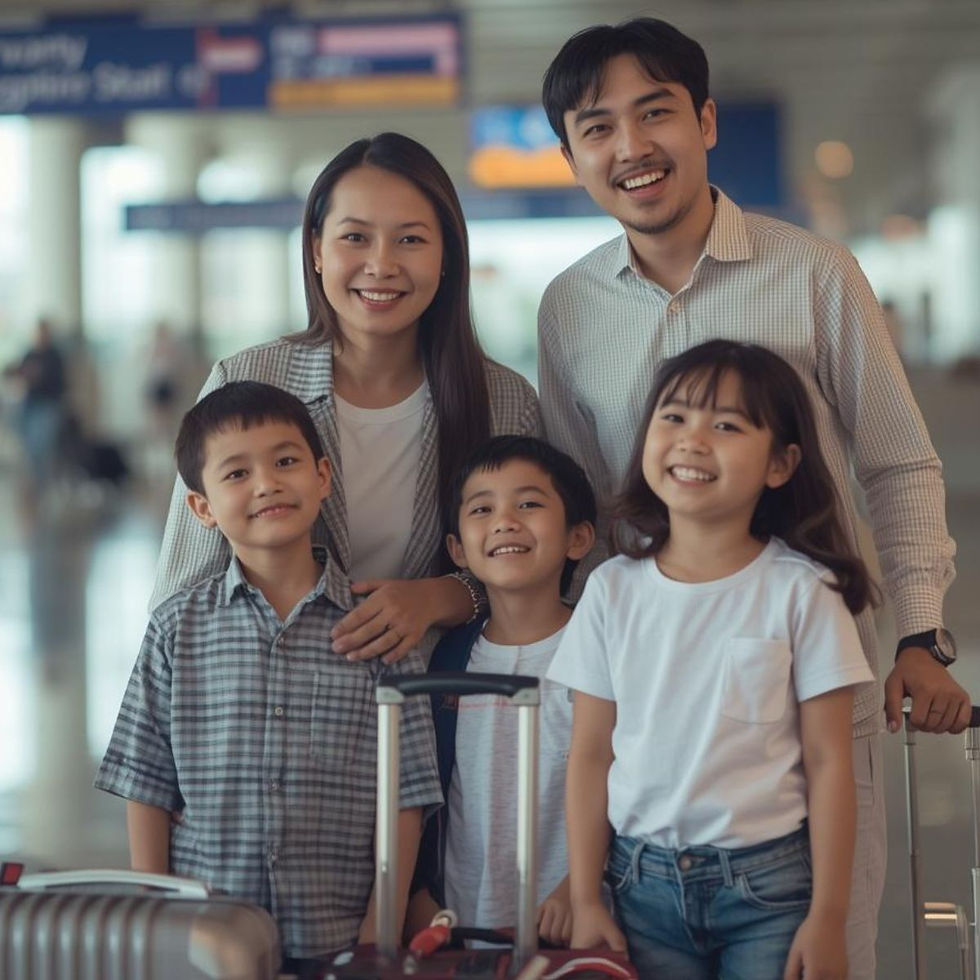
Why Pre-Travel Health Matters More Than Most Parents Realise
Travel-related illness in children is more common than parents expect. International data published by the US National Library of Medicine estimates that traveller's diarrhoea affects 40 to 60 percent of travellers visiting resource-limited destinations. A separate review on children specifically notes that up to 50 percent of travellers from developed countries to developing countries can expect at least one episode of diarrhoea during a two-week stay — and younger children tend to suffer more severely because they dehydrate faster.
Add to that the usual mix of long-haul flights, sleep disruption, unfamiliar food, mosquito exposure in regional destinations, and the occasional missed vaccination booster, and you have a recipe for a holiday cut short.
The good news is that almost all of this is preventable with a short pre-travel consultation, ideally done four to six weeks before departure.
"Most families come in asking about vaccines, but the real value of a pre-travel visit is the destination-specific risk discussion — what is circulating right now, what to actually pack, and what to do if your child gets sick abroad. That five-minute conversation often saves the holiday." — Dr Lim Chong Soon Daniel, Senior Family Physician, Oaklife Family Clinic
When to Book Your Pre-Travel Consultation
The Communicable Diseases Agency (CDA) Singapore recommends visiting your doctor four to six weeks before international travel. This window matters because some vaccines need time to take full effect, and others need to be given as a series.
That said, even a last-minute consultation a few days before flying is far better than nothing — your doctor can still advise on prescription medications, traveller's kits, and red flags to watch for.
What to bring to your appointment:
Your child's vaccination booklet or HealthHub vaccination record
Your itinerary — countries, cities, and the type of accommodation (urban hotel vs rural homestay matters)
A list of any current medications and allergies
Any travel insurance details (some require GP sign-off for pre-existing conditions)
Vaccinations: What to Check Before You Fly
First, the basics. Make sure everyone in the family is up to date with the National Childhood Immunisation Schedule and the National Adult Immunisation Schedule. This includes measles, mumps, rubella (MMR), diphtheria, tetanus, pertussis, polio, and influenza.
Measles, in particular, is making a comeback worldwide. The World Health Organization has reported global measles cases at levels significantly higher than pre-pandemic. If you are travelling with an infant aged 6 to 11 months, your doctor may recommend an early dose of the MMR vaccine before you fly — this is increasingly common advice for families heading to regions with active outbreaks.
Destination-specific vaccinations to discuss
Depending on where you are going, your doctor may also recommend:
Hepatitis A and B — for travel to many parts of Southeast Asia and beyond.
Typhoid — particularly if you will be eating outside major hotel restaurants.
Japanese encephalitis — for rural travel to parts of Asia, especially during rainy seasons.
Rabies — for trips involving outdoor activities, hiking, or destinations where stray dogs are common.
Yellow fever — required for re-entry into Singapore if you have transited through certain countries. The certificate must be valid before travel.
Traveller's Diarrhoea: The Most Common Holiday Illness
Traveller's diarrhoea is the single most common medical problem affecting families abroad. As we already mentioned, up to 50 percent of travellers may experience at least one episode on a two-week trip. For children, the bigger risk is not the diarrhoea itself but the speed at which young bodies dehydrate.
The classic adage is "boil it, cook it, peel it, or forget it" — but with kids, the practical version looks more like this:
Practical food and water rules for travelling with kids
Bottled or boiled water only — including for brushing teeth and rinsing fruit
Avoid ice cubes unless you know they were made from filtered water
Skip raw salads, unpeeled fruit, and unpasteurised dairy
Choose food that is freshly cooked and served piping hot
Be cautious with buffets, especially items that have been sitting out
Carry oral rehydration salts (ORS) in your travel kit — these are non-negotiable for kids
If your child does develop diarrhoea, focus on rehydration first. Plain water is not enough on its own — children lose salts as well as fluids, so ORS or a similar rehydration solution is what you actually need. Read more in our guide on vomiting and diarrhoea in children for warning signs that warrant medical attention.
Mosquito-Borne Illness: Don't Forget the Repellent
Many popular regional destinations — Bali, Phuket, Hoi An, parts of Malaysia and the Philippines — have ongoing dengue activity, and several also have malaria risk in rural areas. Singapore parents are familiar with dengue at home, but travelling often means more outdoor time and less consistent use of repellent.
A few simple rules:
Use a DEET- or picaridin-based insect repellent appropriate for your child's age — apply before sunscreen if you are using both
Cover up with light long-sleeved clothing during peak mosquito hours (early morning and evening)
Use mosquito nets if your accommodation does not have proper screens or air-conditioning
For destinations with malaria risk, ask your doctor about prophylactic medication — this needs to be started before you leave
See our full guide to dengue season in Singapore for more on symptoms, prevention, and what to do if you suspect dengue after returning home.
Other Travel Health Essentials Worth Discussing
Motion sickness
If your child is prone to motion sickness, a quick discussion with your doctor about age-appropriate options — including over-the-counter antihistamines or acupressure bands — can save everyone's sanity on a long flight or winding mountain road.
Jet lag
For trips crossing more than three time zones, expect 2 to 4 days of disrupted sleep in younger children. Sticking to local meal and sleep times from day one helps the body adjust faster than trying to ease in gradually.
Altitude
Heading somewhere high — Cameron Highlands, Genting, parts of Yunnan, the Himalayas? Children can develop altitude sickness too, and the symptoms (headache, nausea, fatigue) often look like ordinary travel grumpiness. Mention any high-altitude legs of your trip to your doctor.
What to Pack in Your Family Travel Medical Kit
Here is the pre-travel health checklist in Singapore.
We recommend for families heading on a 1- to 2-week regional trip with young children:
Medications
Paracetamol (syrup for younger children, tablets for older kids and adults)
Ibuprofen (if appropriate for your child's age)
Oral rehydration salts (ORS) — at least 6 sachets for a family of four
Antihistamine syrup or tablets for allergic reactions and bites
A topical antibiotic ointment (e.g. mupirocin) for cuts and scrapes
Hydrocortisone 1% cream for itchy bites and minor rashes
Any prescription medications your child takes regularly — bring more than you need
Other essentials
A digital thermometer
Plasters in a few sizes, sterile gauze, and tape
Sunscreen (SPF 30 or higher, broad-spectrum) and insect repellent
Hand sanitiser and antibacterial wipes
A small printout of your child's allergies and current medications, kept in your wallet
Travel insurance details and the 24-hour assistance number
For a more detailed packing list with younger kids in mind, our earlier guide on what to pack and prepare when travelling with kids covers flu prevention and travel health essentials in more depth.

A well-stocked travel medical kit covers most of the small emergencies you will run into on holiday. Source
Returning Home: Red Flags to Watch For
Some travel-related illnesses do not show up until after you are back in Singapore. Bring your child to a doctor if they develop any of the following within four weeks of returning home:
Fever — especially after travel to dengue, malaria, or typhoid-risk regions
Persistent diarrhoea lasting more than 3 days, or any blood in the stool
Unexplained rash — particularly with fever
Severe fatigue or breathlessness that does not match the usual post-holiday tiredness
Yellowing of the eyes or skin (jaundice)
Even if symptoms seem mild, mention your travel history to the doctor. Some infections like dengue can present with non-specific symptoms in the early stages but progress quickly. Our guide on fever in children — when to worry and when to wait covers what to look out for in more detail.
"We saw a family last June whose 5-year-old developed a high fever three days after returning from Bali. The parents thought it was just travel exhaustion. It turned out to be dengue, and they were grateful we caught it early when she came in for assessment. The takeaway: when in doubt after a trip overseas, just come in and get checked." — Dr Jacquelyn Melody, Family Physician, Oaklife Family Clinic
Frequently Asked Questions About Pre-travel Health Checklist in Singapore
Q. How early should I book a pre-travel consultation?
A. Ideally four to six weeks before you fly. This gives time for any vaccines that need a series of doses, and for prescriptions to be filled. That said, even a few days before is still useful.
Q. Are pre-travel consultations covered under CHAS?
A. CHAS covers the standard GP consultation. Specific vaccinations and travel-related medications are usually charged separately. Our front desk can walk you through subsidies and out-of-pocket costs at the time of booking.
Q. Do I need to bring my child's vaccination record?
A. Yes, please. The vaccination booklet or your HealthHub digital record helps us check whether any boosters are due, and avoids duplicate vaccinations.
Q. What if we are leaving in less than a week?
A. Come in anyway. Even a quick last-minute consult lets us advise on traveller's diarrhoea management, prescription anti-emetics, and red flags to watch for during and after your trip.
Plan Your June Travel Health Check at Oaklife Family Clinic
A pre-travel check-up takes about 15 to 30 minutes — and it is one of the simplest things you can do to protect your family's holiday. We are CHAS-approved, walk-ins are welcome, and our doctors see families travelling to all parts of Asia and beyond every week.
Visit us: 592G Balestier Road, Singapore 329902
Call: 6980 8568
Email: oaklife.clinic@gmail.com
CHAS-approved family clinic — walk-ins welcome.


