

Ringworm vs Eczema in Children: How to Tell the Difference

Your child has a red, itchy patch that has been there for a few days, and you are not sure what it is. Is it ringworm — something that needs an antifungal cream — or is it eczema flaring up again? In Singapore's warm, humid climate, both are common in children, and to make things harder, they can look remarkably similar at first glance.
Telling ringworm vs eczema in children apart matters, because the treatment is different. A cream that helps one can actually make the other worse. This guide walks you through the key differences, why the mix-up happens so often here, and when it is worth having a doctor take a look.
Ringworm vs eczema: the quick comparison
Here is how the two conditions usually differ. Keep in mind these are general patterns, not hard rules — some rashes sit in between, which is exactly why a proper diagnosis helps.
At a glance | Ringworm (tinea) | Eczema (atopic dermatitis) |
Cause | A fungal infection — it is contagious | A long-term inflammatory skin condition — not contagious |
Shape | Round or oval with a raised, scaly edge and a clearer centre — a ring | Irregular patches with no clear ring and a less defined border |
Itch | Mild to moderate | Often intense |
Spreads? | Yes — outward, to other body parts, and to other people | No — flares and settles in the same typical areas |
Usual spots | Scalp, body, groin, feet — warm, sweaty areas | Cheeks, neck, elbow and knee creases, hands |
Triggers | Heat, sweat, sharing towels or combs, contact with pets | Heat, sweat, dryness, soaps, allergens, stress |
Treatment aim | Clear the fungus with antifungal medicine | Calm inflammation and repair the skin barrier; ongoing care |
Read also: Heat Rash vs Viral Rash in Babies and Toddlers: A Singapore's Parent Guide to Telling them Apart
What is ringworm?

Despite the name, ringworm has nothing to do with worms. It is a fungal infection of the skin (doctors call it tinea), caused by fungi that live on the skin's surface and thrive in warm, damp conditions — which describes Singapore most of the year.
It is contagious. Children often pick it up through skin-to-skin contact, sharing towels, combs or hats, contact with pets, or warm shared surfaces like changing-room floors and sports mats. It can also spread from one part of the body to another. Depending on where it appears, you may hear it called:
Tinea corporis — on the body
Tinea capitis — on the scalp (more common in children, and can cause patchy hair loss)
Tinea pedis — on the feet (athlete's foot)
Tinea cruris — in the groin folds
The classic sign is a round or oval patch with a raised, scaly, slightly redder edge and a clearer centre, which slowly expands outward.
What is eczema?
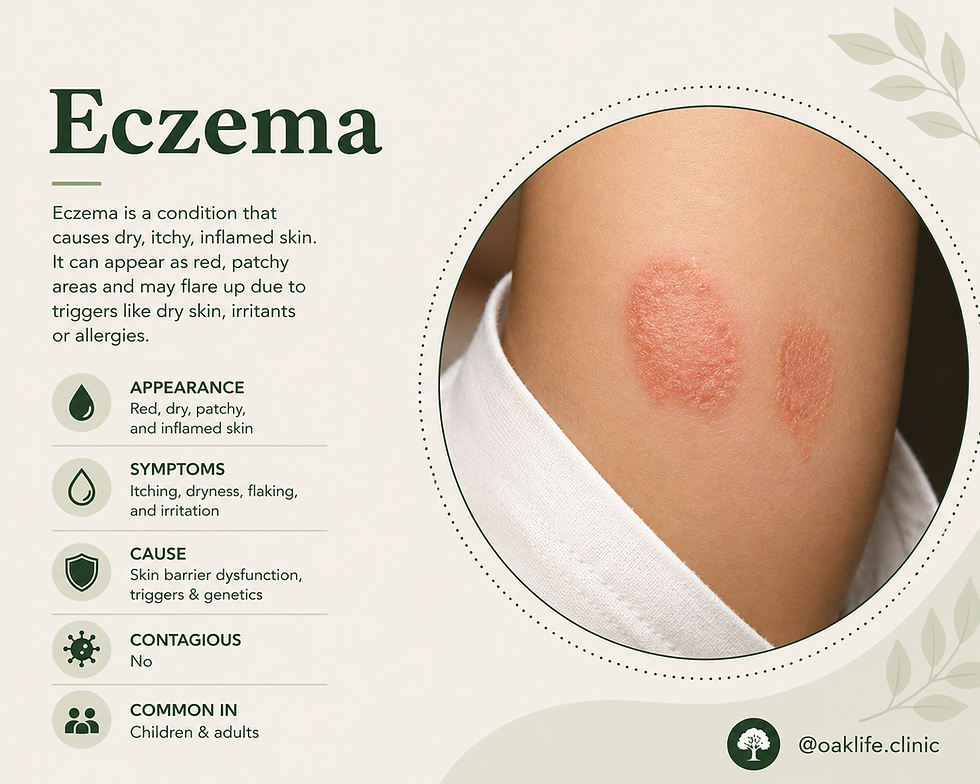
Eczema — most commonly atopic dermatitis — is a long-term inflammatory skin condition, not an infection. It happens when the skin's natural barrier does not hold moisture well, leaving skin dry, easily irritated and prone to flares. It is not contagious, and it often runs in families alongside asthma or allergies.
Eczema is very common in Singaporean children — it affects roughly two in ten schoolchildren — and our heat and humidity, combined with sweat, can set off flares. It tends to show up as itchy, dry, red patches in the skin creases (elbows, knees, neck) and on the cheeks and hands, and it comes and goes rather than steadily spreading.
The key differences, explained
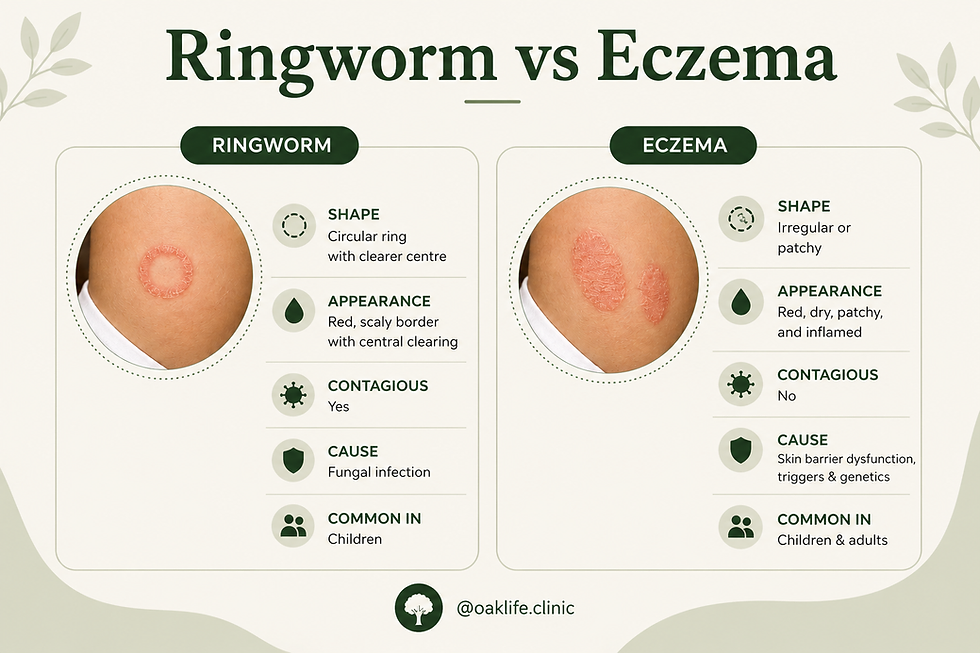
If you only remember a few things, make it these four.
Shape and border. Ringworm tends to form a defined ring with a clearer centre and a raised edge. Eczema patches are usually more irregular, with no clear ring and a less distinct border.
Itch. Eczema is often intensely itchy. Ringworm usually itches less.
Does it spread? Ringworm expands outward and can pass to other people or other body parts. Eczema flares and settles in the same typical spots and is not catching.
How it responds to treatment. Ringworm clears with antifungal treatment. Eczema needs moisturising and inflammation control, not antifungals — and importantly, a steroid cream meant for eczema can mask and worsen ringworm, making it spread (a pattern doctors call tinea incognito).
Why the mix-up is so common in Singapore
Two things make this confusing locally. First, our humidity is a double whammy: it helps skin fungi flourish, and the heat and sweat also trigger eczema flares — so both conditions are simply more common here than in cooler climates.
Second, one type of eczema looks almost exactly like ringworm. Nummular (discoid) eczema forms coin-shaped, circular patches that are easily mistaken for a fungal ring. Even careful parents get caught out by this one — which is why reaching for a cream without knowing what you are treating can backfire.
"Ringworm and eczema need opposite treatments, so guessing is risky — a steroid cream meant for eczema can actually let ringworm spread. When a rash is round, spreading, or not settling, a quick skin check saves weeks of trial and error." Dr Daniel Lim, Senior Family Physician, Oaklife Family Clinic.
How a doctor tells them apart
A diagnosis is usually quick and straightforward. The doctor examines the rash — its shape, border, location and how it has changed — and asks about itch, contact with pets or other children, and any history of eczema or allergies in the family.
If it is unclear, a simple, painless skin scraping can be examined under a microscope or sent for a fungal culture to confirm whether a fungus is present. This small step removes the guesswork and points to the right treatment from the start.
Why getting the treatment right matters
The two conditions are managed very differently:
Ringworm is treated with antifungal medicine — usually a cream, and sometimes an oral medicine for scalp involvement or stubborn cases.
Eczema is managed with regular moisturising, avoiding triggers, and doctor-guided anti-inflammatory treatment during flares.
Using the wrong one does not just fail to help — it can set things back. An antifungal cream will not calm an eczema flare, and an eczema steroid cream can let ringworm spread quietly. When you are unsure, it is safer to confirm the diagnosis before treating.
Can my child have both?
Yes. Skin that is broken or scratched from an eczema flare is more vulnerable to infection, so a child with eczema can also pick up ringworm in the same area. If an eczema patch suddenly changes shape, develops a clear expanding ring, or stops responding to the usual care, it is worth having it checked.
When to see a doctor
See a doctor if your child's rash:
Is not improving after one to two weeks of care
Is spreading, or you are simply not sure what it is
Involves the scalp or comes with patchy hair loss
Is very red, raw, weepy or painful, or shows signs of infection such as pus, crusting or fever
Keeps coming back despite treatment
Simple ways to lower the risk
Keep skin cool and dry — change out of sweaty or wet clothes promptly, and dry well after showering or swimming.
Choose loose, breathable cotton clothing in our humid weather.
Avoid sharing towels, combs, hats and bedding, and wash them regularly.
Have itchy, scaly patches on pets checked and treated.
For eczema-prone skin, moisturise daily and keep known triggers in check.
If you are unsure whether it is ringworm or eczema, you do not have to guess. As a family and children's clinic in Balestier, Oaklife sees these rashes regularly, and Dr Daniel's training in family practice dermatology means skin concerns are assessed carefully and treated correctly the first time. We are CHAS- and HealthierSG-approved, so eligible visits are subsidised.
Frequently asked questions about Ringworm vs Eczema in Children (Singapore)
Q. How can I tell if my child has ringworm or eczema?
A. Look at the shape: ringworm usually forms a defined ring with a clearer centre and tends to spread outward, while eczema is more irregular, very itchy, and flares in the skin creases. If you are unsure, a doctor can confirm with a quick skin check.
Q. Is ringworm contagious?
A. Yes. It spreads through skin contact, shared items like towels and combs, and contact with pets. Eczema is not contagious.
Q. Will my child's eczema cream treat ringworm?
A. No — and a steroid eczema cream can actually let ringworm spread. Ringworm needs antifungal treatment, which is why confirming the diagnosis first is worthwhile.
Q. Can eczema turn into ringworm?
A. Eczema does not become ringworm, but broken eczema skin can pick up a fungal infection, so a child can have both at once.
Q. How long does ringworm take to clear?
A. With the right antifungal treatment, body ringworm often improves within a couple of weeks, though your doctor will advise how long to continue. Scalp ringworm usually takes longer and may need an oral medicine.
This article is for general information and is not a substitute for medical advice. If you are concerned about your child's skin, please see a doctor.


