

How Much Sugar Is Too Much? A Singapore Parent's Guide to Children's Sugar Intake

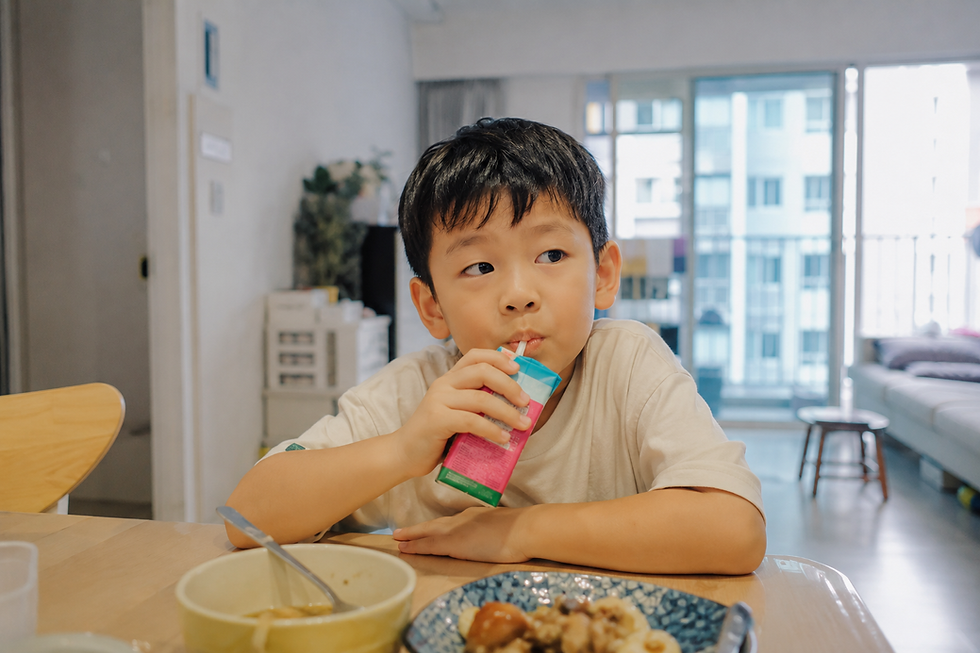
Sugar has a way of sneaking into a child's day without anyone reaching for a sweet. A cup of packet drink at recess, a bowl of flavoured cereal, a bottle of yoghurt drink after school — none of it feels indulgent, yet it can add up quickly. In Singapore, where sweetened drinks and snacks are woven into daily life, many parents are surprised to learn just how much sugar their child is consuming. Understanding children's sugar intake in Singapore starts with knowing where sugar actually hides — here's what's considered a healthy limit, where it's coming from, and simple ways to bring it down without a fight at the dinner table.
Recommended Children's Sugar Intake in Singapore
The World Health Organization guideline on sugars intake recommends that free sugars — the sugar added to food and drinks, plus sugars naturally found in honey, syrups, and fruit juice — make up no more than 5 to 10% of a child's daily energy intake. In practical terms, this works out to roughly 25 to 35 grams of added sugar a day for most school-going children, depending on age and activity level. For context, a single can of regular soft drink or packet chrysanthemum tea can contain 30 grams of sugar or more — meaning one drink can already use up a full day's allowance.
Where the Sugar Is Actually Hiding
Sugary drinks are the single biggest source of added sugar for children in Singapore, but they're rarely the only source. Common everyday culprits include:
Packet and bottled drinks — chrysanthemum tea, soy milk, 100 Plus, and similar beverages sold at school canteens and hawker stalls.
Flavoured milk and yoghurt drinks marketed as healthy options for children.
Breakfast cereals, even those with cartoon packaging suggesting they're a wholesome start to the day.
Sauces and condiments such as ketchup, chilli sauce, and some noodle seasoning packets.
"100% fruit juice" — while it contains natural sugars rather than added sugar, it still counts toward free sugar intake and lacks the fibre of whole fruit.
Since April 2023, Singapore has required colour-coded Nutri-Grade labels on pre-packaged and freshly prepared drinks, which makes it easier to spot high-sugar options at a glance — a grade C or D label is a useful cue to reach for something else.
Why It Matters Beyond the Sweet Tooth
Consistently high sugar intake in childhood is linked to a few specific, well-documented concerns:
Tooth decay — sugar feeds the bacteria that cause cavities, and Singapore has one of the higher rates of childhood dental caries in the region.
Excess weight gain — sugary drinks in particular add calories without the fullness that solid food provides, making it easy to over-consume. Read more in our article on obesity in Singapore.
Displacing nutrient-dense food — a child who fills up on sweet drinks and snacks often has less appetite for the fruit, vegetables, and protein their growing body needs.
Contrary to popular belief, sugar itself has not been shown to directly cause hyperactivity in most children — but it's still worth managing for the reasons above.
Practical Swaps That Don't Require a Battle
Send a reusable water bottle to school rather than money for canteen drinks, or make plain water the easy default at home.
Choose Nutri-Grade A or B drinks when a packet drink is unavoidable.
Offer whole fruit instead of fruit juice — it takes longer to eat and comes with fibre that slows sugar absorption.
Read the nutrition label rather than the front-of-pack marketing, especially for cereals, yogurts, and "kids' snacks."
Cut back gradually rather than all at once — taste preferences shift over a few weeks as sweetness expectations reset.

When to Speak to a Doctor
Most sugar-related concerns are about long-term habits rather than a single event. That said, it's worth bringing up with your family doctor if your child is gaining weight rapidly, has had multiple cavities at a young age, or if there's a family history of diabetes or high cholesterol — early habits make a real difference over time.
“Parents are often more surprised by where the sugar is coming from than by how much of it there is. It's rarely the birthday cake that's the problem — it's the daily packet drink or flavoured yoghurt that quietly adds up. Small, steady swaps make a much bigger difference than cutting everything out at once,” says Dr Jacquelyn Melody, family physician and paediatric lead at Oaklife Family Clinic.
Frequently Asked Questions about Children’s Sugar Intake in Singapore
Q. How much sugar should a child have per day in Singapore?A. Most children should stay under 25–35 grams of added sugar a day, based on WHO guidelines recommending free sugars stay under 5–10% of daily energy intake.
Q. What are the biggest hidden sources of sugar for kids in Singapore?A. Packet and bottled drinks (chrysanthemum tea, flavoured milk, soy milk), breakfast cereals, and condiments like ketchup are common culprits — often more than sweets or desserts.
Q. Does sugar make children hyperactive?
A. No — sugar has not been shown to directly cause hyperactivity in most children, though it's still worth managing for weight and dental health reasons.
Q. What does the Nutri-Grade label mean?A. It's Singapore's colour-coded system (A to D) showing a drink's sugar and saturated fat content — Grade A is lowest, Grade D is highest.
Q. How can I cut my child's sugar intake without a fuss?A. Start gradually: swap sugary drinks for water or Nutri-Grade A/B options, offer whole fruit instead of juice, and read labels rather than front-of-pack marketing.
Talk to Us About Your Child's Nutrition
If you'd like guidance on your child's diet, weight, or overall growth, Oaklife Family Clinic is here to help at both our Balestier and Upper Bukit Timah branches.
Oaklife Family Clinic (Balestier)
592G Balestier Road, Singapore 329902
Oaklife Family Clinic (Upper Bukit Timah)
182 Jalan Jurong Kechil #01-65, Singapore 596152
Phone: 6980 8568 | Email: oaklife.clinic@gmail.com | Website: oaklifefamilyclinic.com.sg | Instagram: @oaklife.clinic


